DHRUBAJYOTI ROY, the visionary behind Builtarchi.com, who holds a passion for transforming ideas into tangible and awe-inspiring structures. His multifaceted persona encompasses a love for cars & by profession an Architect.
Do you know that ‘less is more’ in architecture? That’s the idea behind minimalist architecture. It’s all about keeping things simple and functional while making a significant impact. Let’s explore what makes it unique.
What Is Minimalist Architecture?
It is designing buildings and spaces that celebrate simplicity and functionality. It’s like having a beautiful, clean canvas to work with. This style has become popular lately, and we’ll find out why.
Where Did It Come From?
It started in the middle of the 20th century as a reaction to fancy and overly decorated buildings from the past, like those Victorian ones. Architects like Ludwig Mies van der Rohe believed that “Less is More” which became the heart of minimalist design.
Key Features of Minimalist Architecture
Simplicity
This is the most important thing. Minimalist buildings have clean lines, simple shapes, and only a few colors. Inside, they are clutter-free and practical.
Space Matters
This architecture best uses space. They have open areas, big windows, and carefully placed furniture to make everything feel open and airy.
Materials
Architects choose materials that are strong and look good. Things like concrete, steel, glass, and wood are often used and are usually shown as they are, without fancy finishes.
Not Much Decor
You will only find a little decoration in minimalist buildings. Instead, the building itself is like a piece of art. Inside, a few simple pieces of furniture or art might fit the style.
Uses a limited color palette, often with neutral colors.
Cares more about functionality than decorations.
I Love natural light and open spaces.
Often has a timeless look.
Contemporary Architecture
I Like to try new things and be innovative.
Can have many different looks, from minimalist to very unique.
Sometimes experiments with unusual materials.
Adapts to new needs and technology.
Can use a wide range of colors.
Impact of Minimalist Architecture
It may seem simple, but it can have a significant impact. Keeping things clean and straightforward creates a peaceful and purposeful feeling. It lets people connect more with their surroundings and encourages mindfulness.
Also, it’s good for the environment. Oversized windows and clever design mean less need for lights and heating, which saves energy. The rugged materials used in minimalist buildings also make them last long, reducing their environmental impact.
Conclusion
It is all about simple, functional, and beautiful design. It started a while ago but still influences how buildings are made today. While it’s different from other styles, it shows that sometimes, keeping things simple can be the most beautiful architectural choice.
Architecture is a blend of art and science, where visionary minds transform the ordinary into the extraordinary. Studying the works of the best architects in the world is a source of inspiration for aspiring designers and architects. Remarkable architects throughout history have graced the world, each leaving an indelible mark on the built environment.
When it comes to iconic structures, the best architects in the world have left an indelible mark on architectural history. In this article, we’ll explore the lives and works of the 15 best architects in the world, spanning various eras and architectural movements.
Best Architects in the World
1. Antoni Gaudí (1852-1926)
Born: June 25, 1852, in Reus, Catalonia, Spain
Died: June 10, 1926, in Barcelona, Spain
Notable Work: Sagrada Familia, Park Güell, Casa Batlló
Movement: Modernism
Antoni Gaudí, a pioneer of the Modernisme movement, is known for his unique architectural style characterized by organic forms, vibrant colors, and intricate detailing. His masterpiece, the Sagrada Familia in Barcelona, is a masterpiece still under construction, showcasing his dedication to nature-inspired design.
2. Frank Lloyd Wright (1867-1959)
Born: June 8, 1867, in Richland Center, Wisconsin, USA
Frank Lloyd Wright’s vision of organic architecture integrates with the natural world. His buildings often feature horizontal lines, open spaces, and a close connection to nature. Fallingwater, a house built over a waterfall, displays his mastery of blending architecture with its surroundings.
Notable Work: Farnsworth House, Barcelona Pavilion, Seagram Building
Movement: Modernism, International Style
He is regarded as one of the best architects in the world. Architect Mies van der Rohe is considered a pioneer of modernist architecture. His “less is more” philosophy emphasized simplicity and modern materials. Collaborating with the best architects in the world can elevate any construction project to new heights of excellence. The Barcelona Pavilion, a minimalist architectural masterpiece, and the Seagram Building in New York City are icons of his influential work.
4. Le Corbusier (1887-1965)
Born: October 6, 1887, in La Chaux-de-Fonds, Switzerland
Died: August 27, 1965, in Roquebrune-Cap-Martin, France
Le Corbusier, a pioneer of modern architecture, championed functionalism and urban planning. His “Five Points of Architecture” revolutionized design. The Villa Savoye, with its columns and ribbon windows, remains an enduring symbol of his architectural genius.
5. Louis Kahn (1901-1974)
Born: February 20, 1901, in Pärnu, Estonia
Died: March 17, 1974, in New York City, USA
Notable Work: Kimbell Art Museum, Salk Institute, National Parliament House, Dhaka
Movement: Modernism, Brutalism
Louis Kahn’s architectural legacy is marked by geometric clarity and monumental structures. His use of materials like concrete and attention to natural light is evident in masterpieces like the Kimbell Art Museum and Salk Institute.
6. Oscar Niemeyer (1907-2012)
Born: December 15, 1907, in Rio de Janeiro, Brazil
Died: December 5, 2012, in Rio de Janeiro, Brazil
Notable Work: Brasília, Niterói Contemporary Art Museum, Cathedral of Brasília
Movement: Modernism
Oscar Niemeyer was an iconic figure in Brazilian modernist architecture. His designs, often characterized by sweeping curves and daring forms, were instrumental in shaping the futuristic city of Brasília.
7. Eero Saarinen (1910-1961)
Born: August 20, 1910, in Kirkkonummi, Finland
Died: September 1, 1961, in Ann Arbor, Michigan, USA
Notable Work: TWA Flight Center, Gateway Arch, Dulles International Airport
Movement: Mid-Century Modern
Eero Saarinen’s mid-century modern designs are celebrated for their elegance and innovation. At JFK Airport, the TWA Flight Center and the iconic Gateway Arch in St. Louis reflect his commitment to pushing the boundaries of architectural form.
8. I.M. Pei (1917-2019)
Born: April 26, 1917, in Guangzhou, China
Died: May 16, 2019, in New York City, USA
Notable Work: Louvre Pyramid, National Gallery of Art East Building, Bank of China Tower
Movement: Modernism
I.M. Pei’s architectural career spanned continents and he became renowned for his innovative use of glass and geometric forms. Architects like him are among the best in the world. The Louvre Pyramid symbolizes his ability to blend tradition with modernity.
Frank Gehry’s deconstructivist architecture challenges traditional norms, often appearing fragmented and chaotic. The Guggenheim Museum Bilbao’s undulating titanium exterior is an architectural marvel that redefined museum design.
10. Norman Foster (1935-present)
Born: June 1, 1935, in Manchester, England
Notable Work: 30 St Mary Axe (The Gherkin), Millau Viaduct, Hearst Tower
Movement: High-Tech Architecture
Norman Foster’s high-tech architectural style embraces cutting-edge technology and sustainable design. His creations blend aesthetics with functionality seamlessly, as seen in The Gherkin and the Millau Viaduct.
11. Renzo Piano (1937-present)
Born: September 14, 1937, in Genoa, Italy
Notable Work: Centre Pompidou, The Shard, Whitney Museum of American Art
Movement: High-Tech Architecture
Studying the works of the best architects in the world is a source of inspiration for aspiring designers and architects. Renzo Piano’s innovative use of materials and transparent facades define his work. The Centre Pompidou in Paris remains an architectural icon with its exposed structural elements.
12. Tadao Ando (1941-present)
Born: September 13, 1941, in Osaka, Japan
Notable Work: Church of the Light, Benesse House, Modern Art Museum of Fort Worth
Movement: Minimalism
Tadao Ando’s minimalist designs emphasize simplicity and the play of light and shadow. His Church of the Light is a prime example of his mastery of spatial design.
13. Rem Koolhaas (1944-present)
Born: November 17, 1944, in Rotterdam, Netherlands
Notable Work: Seattle Central Library, CCTV Headquarters, Casa da Música
Movement: Deconstructivism, Parametricism
CCTV Headquarters, Beijing, China
Rem Koolhaas’s bold and unconventional designs challenge architectural conventions. His Washington Central Library’s dynamic form and the CCTV Headquarters in Beijing are architectural landmarks.
14. Zaha Hadid (1950-2016)
Born: October 31, 1950, in Baghdad, Iraq
Died: March 31, 2016, in Miami, Florida, USA
Notable Work: Heydar Aliyev Center, MAXXI National Museum, London Aquatics Centre
Movement: Deconstructivism
Zaha Hadid’s avant-garde designs pushed the boundaries of what was architecturally possible. Her fluid and futuristic buildings, such as the Heydar Aliyev Center, continue to inspire.
Bjarke Ingels is known for his playful and innovative approach to design. His projects, like the 8 House and VIA 57 West, showcase his ability to create functional yet aesthetically captivating spaces.
Conclusion
These 15 best architects in the world have left their mark on the world of architecture, each contributing to the field uniquely. From Gaudí’s playful Modernisme to Ingels’ contemporary creations, these visionary minds continue to shape how buildings are perceived and interacted with. Their long-lasting legacies inspire architects and enthusiasts alike, reminding us that architecture is not just about structures but also the art of shaping our world.
Did you know culverts are unique structures that help water flow safely under roads and bridges? They are essential for preventing floods and keeping our transportation systems working well. There are different culvert types, each with its unique features. In this article, we will learn about these culvert types in a fun and easy way.
List of Types of Culverts
Box Culvert Types: Strong and Versatile
Box culverts are big, rectangular, or square tubes made of rigid materials. They are super strong and can handle heavy things on top, like cars and trucks. Box culverts served in highways, railways, and even pedestrian tunnels. They can also be joined together or made longer if needed.
Pipe Culverts: Simple and Smart
Pipe culverts are like round or oval pipes made of different materials, such as concrete or plastic. They are suitable for carrying smaller amounts of water, like a stream or river. Pipe culverts are easy to install and cost less money. You can find them in driveways, rural roads, and small bridges.
Arch Culverts: Fancy and Natural
Arch culverts are like half circles or ovals. They functioned from solid materials like concrete or metal. Arch culverts not only do their job well, but they also look pretty cool! They work in places where we want the channel to blend in with nature or look nice, like parks or scenic roads.
Pipe Arch Culverts: Clever Flow Managers
Pipe arch culverts are like a mix of pipe and arch culverts. They have a unique shape that helps water flow efficiently. They are great when we need a bigger opening to manage the water well. Pipe arch culverts served in roads, railways, and places with little space.
Box Culvert Bridges: Strong and Traffic-Friendly
Box culvert bridges are unique because they let water flow, and cars and trucks go over them. They are like a combination of a culvert and a bridge. Box culvert bridges are solid and can carry heavy loads. They are used when a regular bridge is not possible or too expensive.
Slab Culverts: Simple and Quick
Slab culverts are like flat, simple structures made of solid concrete. They served for smaller water flows, like crossing a stream or managing rainwater. Slab culverts are easy to build and can be put in place quickly. They operate in drainage channels and stormwater systems.
Conclusion
Culverts are unique structures that help water flow safely under roads and bridges. We learned about different culvert types, including box culverts, pipe culverts, arch culverts, pipe arch culverts, box culvert bridges, and slab culverts. Each type has its unique features and uses.
Remember, culverts are essential for preventing floods and keeping our transportation systems working well. By learning about different culvert types, we can understand how engineers and builders create safe and efficient ways for water to flow. Keep exploring and learning about the fantastic world of infrastructure!
Lime is a unique mineral that has served various purposes in different ways for a long time. It comes from limestone and is very useful in many industries. In this article, we will learn about the different types of lime and how they use as building materials. Whether you are interested in construction, farming, or just curious about lime, this article will help you understand its different forms and how they operate.
Quicklime (Calcium Oxide)
What is Quicklime?
There are several types of lime. A vital role is played by quicklime. Quicklime is a type of lime made by heating limestone at high temperatures. This process removes carbon dioxide and leaves a white, vital substance called Quicklime. It is essential to handle Quicklime with care to prevent skin irritation.
How is Quicklime Used?
Construction
Quicklime has existed for a long time in construction. It is mixed with water to make a strong material called mortar or plaster, used to build structures.
Steel Industry
Quicklime plays an essential role in making steel. It helps remove impurities from molten iron and protects the steel from damage.
Water Treatment
Quicklime is used to clean water. It helps get rid of impurities and makes the water safe to use.
Chemical Manufacturing
Quicklime makes many chemicals used in industries and agriculture.
Hydrated Lime (Calcium Hydroxide)
What is Hydrated Lime?
Hydrated lime is another type of lime in the list of types of lime that is made by adding water to Quicklime. This process creates a fine, white powder called hydrated lime. It is safer to handle than Quicklime.
How is Hydrated Lime Used?
Soil Stabilization
Hydrated lime makes soil stronger in construction projects. It improves the soil’s properties and makes it more stable.
Construction
Hydrated lime is added to mortar and concrete to make them stronger and more durable.
Environmental Remediation
Hydrated lime cleans up contaminated soil and waste. It helps remove harmful substances and makes the environment safer.
Flue Gas Desulfurization (FGD)
Hydrated lime reduces air pollution from factories and power plants. It helps remove sulfur dioxide from exhaust gases.
Slaked Lime
Slaked lime, also known as Hydrate of lime, is produced through the process of slaking, which involves combining quicklime with water. It is available as a pure white powder.
When exposed to the atmosphere and in the presence of water, slaked lime absorbs carbonic acid. It is also referred to as calcium hydroxide, calcium hydrate, or lime hydrate.
The combination of quicklime and water results in a slurry material, making slaked lime highly suitable for applications such as mortar, plastering, and as a binder in cement.
Fat Lime
Fat lime, also known as white lime, rich lime, high calcium lime, or pure lime, contains a high proportion of calcium oxide. When water is added to fat lime, it undergoes vigorous slaking and expands to a volume two and a half times greater than that of quicklime.
Fat lime is commonly used for pointing in masonry works, foundations, and thickening masonry walls with surkhi.
Hydraulic Lime
Hydraulic lime, also known as water lime, contains approximately 30 percent silica, 5 percent alumina, and iron oxide. When water is added to it, it sets. Hydraulic lime can be classified as follows:
Eminently Hydraulic
This type of hydraulic lime has a chemical composition similar to Ordinary Portland cement (OPC) and consists of 25 to 39 percent silica and alumina. It is suitable for high-quality mortar works.
Semi-Hydraulic
Semi-hydraulic lime contains 15 to 25 percent silica and alumina. It is used in good quality masonry, brickwork, and mortar, but it is less strong than eminently hydraulic lime.
Non-Hydraulic
Non-hydraulic lime contains less than 15 percent silica and alumina. It undergoes less expansion during slaking. Non-hydraulic lime is accepted for less important works where mortar is required.
Lime finds several important applications in construction:
Steel manufacturing
Lime is used to remove impurities in the production of steel.
Soil stabilization
Lime is extensively used to stabilize soil for constructing roads, airfields, and building foundations.
Mortar and plastering
Lime slurry is utilized as mortar for masonry work and plastering.
Asphalt additive
Lime is added to asphalt to improve cohesion and enhance resistance to stripping and aging.
Conclusion
Lime is a versatile mineral that uses in many different ways. Quicklime uses in construction, steelmaking, water treatment, and chemical manufacturing. Hydrated lime is vital in soil stabilization, construction, environmental cleanup, and reducing air pollution. By understanding the different types of lime and how they use, we can appreciate this mineral’s many benefits in various industries.
Types of Architectural Styles have played a significant Throughout history, it played a crucial role in shaping the built environment. These styles have reflected cultural, social, and technological changes from ancient civilizations to modern times. Classical architecture, originating from ancient Greece and Rome, emphasized harmony and precision in design. It influenced iconic styles like Gothic and Renaissance, known for intricate details and symmetry. Modernist movements like Bauhaus and International Style prioritized simplicity and functionality. Today, postmodern architecture reintroduces historical references and playful designs. Understanding these styles is crucial for architects to create spaces that combine aesthetics with functionality, considering clients’ preferences and historical context. By studying architectural styles, professionals gain insights into designing harmonious buildings.
What are the different types of Architectural Styles?
Various Types of Architectural Styles have emerged throughout history, reflecting cultural, social, and technological contexts. Classical architecture, known for mathematical precision and symmetry, draws inspiration from ancient Greek and Roman designs. Gothic architecture stands out with its grandeur, verticality, pointed arches, ribbed vaults, and flying buttresses. Renaissance architecture combines classical principles with domes and frescoes for a harmonious aesthetic. Art Nouveau embraces organic forms, while Modernist architecture emphasizes minimalism, functionality, clean lines, and open spaces. Postmodernism challenges modernism by reintroducing ornamentation and historical references playfully. Contemporary architecture incorporates sustainability and elements from different styles, creating aesthetically and environmentally responsive buildings. Each Type of Architectural Style represents a distinct period of human creativity and innovation in construction techniques.
Exploring the 5 Types of Architectural Styles
Traditional Architectural Styles
Traditional Architecture
Traditional architecture reflects region-specific building practices and materials passed down through generations, often rooted in local culture and historical context.
Classical Architecture
Classical architecture, inspired by ancient Greece and Rome, prioritizes balance, proportion, and classical elements like columns and pediments in its designs.
Neoclassical Style
Neoclassical style is a revival of classical elements, emphasizing symmetry, simplicity, and classical ornamentation, popular during the 18th and 19th centuries.
Victorian Style
Victorian architecture, prevalent during the reign of Queen Victoria, features ornate detailing, varied rooflines, and eclectic design elements.
Gothic Architecture
Characterized by pointed arches, ribbed vaults, and flying buttresses, Gothic architecture stands out uniquely. They are often seen in medieval cathedrals, conveying a sense of verticality and spiritual awe.
Modern Architectural Styles
Modern Architecture
Modern architecture embraces innovative materials and functional design. It emerged in the 20th century, prioritizing simplicity and breaking away from traditional styles.
Contemporary Design
The contemporary design reflects the present era’s aesthetics and functional needs, often incorporating diverse influences, materials, and sustainability principles.
Minimalist Style
The minimalist style focuses on simplicity, clean lines, and minimal ornamentation, aiming to create spaces that emphasize functionality and reduce clutter.
Bauhaus Movement
The 20th-century art and design school championed the fusion of art, craft, and technology, influencing modernist design principles worldwide.
International Style
The International Style, prominent in the 20th century, prioritizes functionalism, open spaces, and modern architectural materials, with a global influence on design trends.
Postmodern Architectural Styles
Postmodern Architecture
Postmodern architecture rejects strict design conventions, embracing eclecticism, humor, and a playful approach to historical references and architectural elements.
Deconstructivism Style
The deconstructivism style challenges traditional architecture by disassembling and reassembling elements to create dynamic, abstract, and visually striking structures.
High-Tech Style
The high-tech style emphasizes advanced technology and industrial materials in architectural design, often showcasing structural and mechanical elements as aesthetic features.
Contextualism Style
Contextualism style seeks to harmonize new architecture with its surroundings, considering local culture, history, and environment, resulting in designs that blend seamlessly with their context.
Vernacular Architectural Styles
Vernacular Architecture
Vernacular architecture is rooted in local traditions and materials, reflecting a specific region or community’s practical needs and cultural influences.
Regional Styles
Regional architectural styles are distinct design approaches that emerge from a particular area’s unique geographical, climatic, and cultural characteristics.
Indigenous Design Principles
Indigenous design principles are architectural philosophies and practices developed by native cultures, often profoundly connected to the environment, sustainability, and community needs.
Sustainable Architectural Styles
Sustainable Architecture
Sustainable architecture aims to minimize environmental impact by using eco-friendly materials, energy-efficient systems, and sustainable design practices to create environmentally responsible buildings.
Green Building Design Principles
Green building design principles focus on reducing energy consumption, conserving resources, improving indoor air quality, and creating healthier and more efficient buildings.
Passive Solar Design
Passive solar design maximizes natural sunlight and heat for energy efficiency, using building orientation, insulation, and materials to regulate temperature and lighting.
Zero-Energy Buildings
Zero-energy buildings generate as much energy as they consume, typically through renewable sources, achieving a net-zero impact on the grid.
Biophilic Design
Biophilic design integrates nature into architecture, incorporating natural materials, light, and green spaces to enhance well-being, productivity, and the connection between humans and the environment.
What are the historical influences on Architectural Styles?
The architectural styles we see today are influenced by history. Architects draw inspiration from past cultures and design movements, with vernacular architecture reflecting local culture and available materials. Construction techniques and materials have also evolved. Neoclassical architecture, for example, was influenced by ancient Greek and Roman styles, emphasizing symmetry and proportionality. Social and political contexts have also shaped architectural trends, such as Gothic cathedrals embodying religious power in medieval Europe. Fusing historical influences with modern elements creates a visual dialogue between the past and present in today’s architectural styles.
Conclusion: Types of Architectural Styles
Studying Types of Architectural Styles is essential in the field of architecture. It provides insights into historical trends, cultural influences, and design principles shaping our built environment. Architects gain a broader perspective when creating their designs, as they can interpret and appreciate architectural works from different eras and regions. Understanding different Types of Architectural Styles also allows architects to cater to specific client preferences or project requirements. Additionally, studying architectural styles helps preserve and restore historic buildings with accuracy and authenticity. Overall, this comprehensive understanding deepens architects’ expertise and enables them to create meaningful, contextualized designs that positively contribute to the evolving landscape of architecture.
Architecture is a diverse field with various architectural styles, each with unique features and historical importance. There are many different types of Architecture. Classical architecture is inspired by ancient Greece and Rome, emphasizing balance and grand symmetrical designs. Gothic architecture from medieval Europe includes pointed arches and elaborate ornamentation. Renaissance architecture incorporates classical elements and adds decorative features like domes and arches. Modernist architecture during the Industrial Revolution focused on utilitarian designs with clean lines. Postmodernism combines elements from different architectural periods. These styles allow architects to create functional spaces that express cultural values and reflect societal changes.
What are the different types of Architecture styles?
Architectural styles are the artistic expressions of human creativity and cultural identity embodied in the structures that shape our built environment. From the timeless elegance of classical Greek and Roman designs to the sleek modernism of the 20th century, architecture has evolved through diverse styles, each reflecting its era’s values, aesthetics, and technological advancements. This exploration delves into the rich tapestry of architectural styles that have left an indelible mark on history and continue to inspire designers today.
Here is a list of 6 different types of Architecture Styles
Classical Architecture
Ancient Greek
Parthenon Temple at Athen, Greece
This iconic style laid the foundation for classical architecture, emphasizing balance and harmony. Columns, including the Doric, Ionic, and Corinthian orders, are signature elements, along with pediments and meticulous symmetry.
Roman
Building on Greek principles, Roman architecture brought innovation with arches, domes, and the pioneering use of concrete. Structures like the Colosseum exemplify Roman engineering prowess.
Medieval Architecture
Romanesque
Predominant during the medieval period, Romanesque architecture is characterized by its fortress-like appearance. Thick walls, rounded arches, and barrel vaults strengthen and secure structures such as medieval European churches and castles.
Gothic
In stark contrast, Gothic architecture embodies grace and verticality. Pointed arches, ribbed vaults, and flying buttresses allowed for taller and more luminous cathedrals, including Notre Dame and Chartres Cathedral.
Renaissance and Baroque
Renaissance
Florence Cathedral, Metropolitan City of Florence, Italy
The Renaissance revived classical ideals with meticulous attention to symmetry, proportion, and classical elements. Buildings like the Florence Cathedral and St. Peter’s Basilica showcase Renaissance grandeur.
Baroque
Architects embraced drama and luxury, employing elaborate ornamentation, curvaceous forms, and chiaroscuro lighting. The Palace of Versailles and the works of Bernini exemplify this style’s flamboyance.
18th and 19th Century Styles
Neoclassical
Inspired by ancient Greece and Rome, Neoclassical architecture returned to classical simplicity and symmetry. Government buildings like the U.S. Capitol and the British Museum reflect its influence.
Rococo
As a reaction to the seriousness of the Baroque, Rococo introduced playfulness and intricate ornamentation, especially in interior design, with its swirling motifs and pastel color palettes.
Modern and Contemporary Architecture
Modernism
Modernism, a 20th-century movement, emphasizes functionality, minimalism, and innovative materials. Pioneered by architects like Le Corbusier and Frank Lloyd Wright, it redefines architectural norms.
Postmodernism
Postmodernism, in reaction to Modernism, playfully incorporates historical elements. Notable examples include the AT&T Building in New York and the Piazza d’Italia in New Orleans.
Contemporary
Contemporary architecture, reflecting environmental concerns and technological advances, prioritizes sustainability and innovation. Architects experiment, pushing the boundaries of architectural expression in today’s ever-evolving landscape.
These architectural styles serve as windows into their respective historical contexts, reflecting their eras’ prevailing cultural and artistic values. Each inspires architects and designers today, contributing to the rich tapestry of architectural diversity.
How does Sustainable Architecture differ from Different types of Architecture?
Sustainable architecture, also known as green or eco-friendly architecture, distinguishes itself from other types of architecture by prioritizing environmental consciousness, energy efficiency, and the well-being of inhabitants. Unlike conventional architecture, which often focuses solely on aesthetics and functionality, sustainable architecture takes a holistic approach by integrating sustainable design principles throughout the entire building process.
It involves utilizing renewable materials and resources and environmentally-conscious practices such as solar panel implementation and geothermal heating/cooling methods, designing buildings to maximize natural light and ventilation, employing water conservation strategies like rainwater harvesting and greywater recycling, and incorporating green spaces to enhance biodiversity.
Sustainable architects apply a life-cycle approach to minimize environmental impacts by considering factors such as construction practices, maintenance requirements, and potential for future adaptations or repurposing of the structure. Moreover, they prioritize occupant health by using non-toxic materials free from harmful chemicals and fostering indoor environments with optimal air quality. Ultimately, sustainable architecture strives to create buildings that harmonize with their surroundings while minimizing their carbon footprint for a healthier planet.
What are examples of famous buildings in Different Types of Architecture?
Famous buildings worldwide showcase the diversity and evolution of architectural styles throughout history. One notable example is the Parthenon in Athens, Greece, representing the pinnacle of classical architecture. Its proportions, use of columns, and intricate sculptures on its pediments depict the harmonious balance achieved by ancient Greek architects. Moving to Gothic architecture, the Notre Dame Cathedral in Paris symbolizes this style’s soaring pointed arches and intricate stained glass windows dating back to the 12th century.
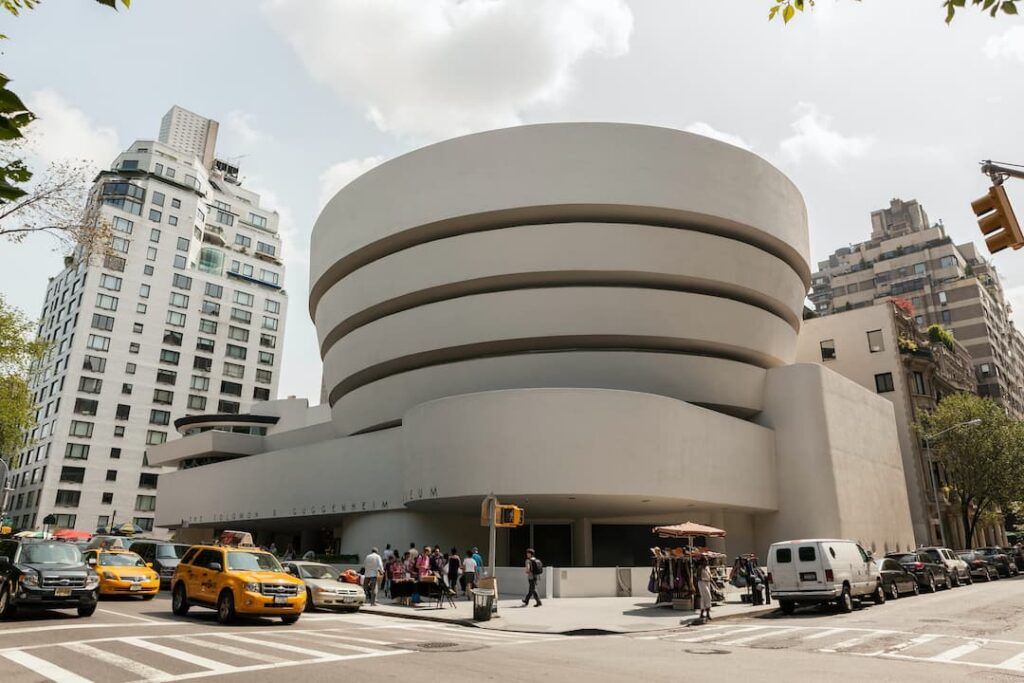
Guggenheim Museum, 5th Avenue, New York, USA
The Burj Khalifa in Dubai represents a modern marvel of contemporary architecture with its sleek design and record-breaking height, exemplifying the principles of modernist architecture. Another famous building displaying startling innovation is Frank Gehry’s Guggenheim Museum Bilbao in Spain, which showcases deconstructivist elements through its organic forms and unconventional materials like titanium. These examples merely scratch the surface of various architectural styles that profoundly shaped cities and societies in the world.
Conclusion: different types of Architecture
The study of different architectural styles not only provides insights into innovation but fosters a deep appreciation for the intrinsic connection between architecture and the human experience. By dissecting movements such as Gothic, Renaissance, Baroque, Modernist, and Postmodernist, professionals gain profound insights into each era’s aesthetic, philosophical, and societal underpinnings.
Moreover, examining architecture across diverse regions underscores the profound impact of geography on design choices, which is crucial for architects addressing unique environmental challenges. This knowledge empowers professionals to craft structures harmonizing with their surroundings while solving complex design challenges in an ever-evolving world. In essence, the exploration of architectural diversity serves as a lens through which we comprehensively understand humanity’s evolving relationship with the built environment.
Ottoman architecture emerged during the 14th to 17th centuries, having a lasting impact on Islamic art and architecture. Inspired by Byzantine, Seljuk, and Persian styles, Ottoman architects combined traditional Islamic motifs with innovative designs. They created grand structures like mosques, palaces, and public buildings characterized by domes, minarets, geometric patterns, calligraphy, and ceramic tiles. The fusion of different architectural traditions resulted in a distinct Ottoman style that harmoniously blended diverse influences. Succeeding sultans further contributed to this architectural tradition, reflecting imperial ambitions and showcasing the synthesis of cultures.
What are the key features of Ottoman architecture?
Sultan Ahmet, Fatih/İstanbul, Turkey
Ottoman architecture, prominent during the Ottoman Empire from the 14th to early 20th century, is characterized by its grand and lavish style. It incorporates intricate geometric motifs in tiling, carvings, and domes, reflecting Islamic influence. Domes are a key feature, symbolizing power and spirituality, with the Hagia Sophia in Istanbul being the most iconic example.
Beautiful gardens and water features enhance the integration of indoor and outdoor spaces, showcased by charming courtyards. Calligraphy is also significant, with inscriptions often quoting the Quran or praising Allah and Muhammad. Showcases the empire’s wealth and cultural advancement and blends elements from various civilizations into a unique and awe-inspiring style.
How did Ottoman architecture influence other architectural styles?
Ottoman architecture fused Byzantine, Persian, and Islamic styles to create a unique aesthetic. It featured grand mosques, palaces, and public buildings with domes, tilework, and minarets. This innovative approach influenced Europe and Asia during the Renaissance and Baroque periods. Notable examples include St. Basil’s Cathedral and the Taj Mahal. Ottoman architects introduced concepts like central planning and courtyards that influenced global architecture—overall, they played a pivotal role in shaping architectural styles worldwide through diverse influences and pioneering design techniques.
What are some famous Ottoman architectural masterpieces?
The Hagia Sophia in Istanbul and the Topkapi Palace are two remarkable architectural masterpieces of the Ottoman Empire. The Hagia Sophia started as a Byzantine cathedral before becoming a mosque, boasting a blend of Byzantine and Islamic architecture with its impressive dome, detailed mosaics, and grand design.
The Topkapi Palace served as the sultans’ residence for almost four centuries, showcasing beautiful courtyards, exquisite pavilions, and lavish chambers adorned with golden calligraphy and valuable relics. The Süleymaniye Mosque, designed by Mimar Sinan, is renowned for its elegant domes and minarets. At the same time, the Selimiye Mosque in Edirne stands out for its impressive height and architectural perfection achieved through precise geometric proportions. These stunning structures symbolize Ottoman power and artistic brilliance and continue to captivate visitors from around the world.
Conclusion
The conclusion of Ottoman architectural development marked a shift in design principles and values. Influenced by Byzantine, Persian, and Islamic styles, the Ottomans created their distinctive style with grandeur and innovation. Examples include the Hagia Sophia and Topkapi Palace, showcasing mastery of engineering techniques and incorporation of nature. However, creativity declined with the empire’s decline, and Western influences took over. Nonetheless, Ottoman architecture remains captivating for its historical and cultural significance.
Indo-Saracenic architecture stands as a remarkable testament to the fusion between Eastern and Western architectural styles that emerged during the colonial era in India. This unique architectural style blends elements of Islamic, Mughal, and Gothic Revival designs with indigenous Indian craftsmanship. With its stunning domes, intricate carvings, and harmonious blend of cultural influences, Indo-Saracenic architecture showcases the grandeur and magnificence of a bygone era. In this article, we will delve into the historical context, key features, iconic masterpieces, regional variations, preservation efforts, and the lasting impact of Indo-Saracenic architecture on India’s architectural landscape.
3 Iconic Indo-Saracenic palaces in India
Victoria Memorial, Kolkata
MumbaiVictoria Memorial, Kolkata
The Victoria Memorial in Kolkata is a stunning example of Indo Saracenic architecture. This majestic white marble monument, built to commemorate Queen Victoria’s reign, blends Mughal and British architectural elements. The vast gardens surrounding the memorial add to its grandeur, making it a must-visit attraction.
Gateway of India, Mumbai
Gateway of India, Mumbai
The Gateway of India in Mumbai is another iconic Indo-Saracenic structure. This monumental arch overlooks the Arabian Sea. This building was established as a symbol of remembrance in honor of King George V and Queen Marys’s entrance into India. Its impressive design, intricate detailing, and unique blend of architectural styles make it one of Mumbai’s most recognizable landmarks.
Mysore Palace, Mysore
Mysore Palace, Mysore
The Mysore Palace in Mysore is a spectacular example of Indo-Saracenic architecture with a touch of European influences. This opulent palace showcases a harmonious fusion of Hindu, Islamic, and Gothic Revival styles. Its intricate arches, delicate frescoes, and vibrant colors make it a visual delight and a testament to its grandeur.
What are the key features of Indo-Saracenic buildings?
Indo Saracenic architecture, prevalent in British colonial India, combines Indian and Islamic styles. It features grand buildings with diverse ornamentation and materials, incorporating Mughal, Rajput, and Gothic architectural elements. Indian design elements, like chhatris and jali work, and local materials, such as red sandstone or marble, are included. This architecture reflects opulence, highlighting Indian heritage and Islamic influence, and is celebrated for its unique beauty in present-day India.
Visits to historic sites and architectural tours
Mysore Palace, Mysore
Architectural tours and heritage walks in cities like Kolkata, Mumbai, and Chennai offer a chance to explore Indo-Saracenic architecture and appreciate the beauty and history of these structures. While preserving the original buildings is essential, there are contemporary adaptations that add a modern twist to the traditional design. Indo Saracenic architecture embodies the fusion of Eastern and Western influences, showcasing India’s rich cultural tapestry. Through preservation efforts and celebrating its legacy, will continue to captivate and inspire future generations, representing India’s architectural heritage.
Conclusion
The Indo-Saracenic architectural style emerged during British colonial rule in India, blending Indian and Islamic elements with European design principles. It featured grand buildings with onion domes, pointed arches, minarets, and intricate stone carvings. Although criticized as a colonial appropriation of Indian heritage, these structures represent cultural fusion and stand as reminders of India’s complex colonial past. Examples include the Victoria Memorial in Kolkata and the Gateway of India in Mumbai, showcasing the rich history and confluence of cultures in India.
Colonial architecture is a testament to past eras’ beauty and heritage, reflecting the colonial period’s architectural styles influenced by European colonization. This article explores colonial architecture’s historical background, distinct features, and global impact. By examining iconic buildings and preservation efforts, we uncover their enduring charm and significance in the modern world. Studying colonial architecture provides insight into cultural heritage, the colonial past, and the evolution of our cities.
Which countries have the best examples of Colonial Architecture?
India, Portugal, and Brazil are renowned for their exceptional examples of colonial architecture. The British East India Company left a lasting architectural legacy in India, with the Victoria Memorial in Kolkata showcasing the grandeur of British colonial design. In Portugal’s Macau, a fusion of Portuguese and Chinese influences can be seen in the historic center, from St. Paul’s Ruins to the intricate patterns of Portuguese tiles. Brazil offers vibrant colonial-style architecture, with landmarks like Pelourinho in Salvador and baroque churches in Ouro Preto displaying captivating European influences blended with local craftsmanship. These countries are ideal destinations for those interested in exploring the fascinating world of colonial architecture.
What are the characteristics of colonial-style buildings?
Colonial-style buildings in North America during the 17th and 18th centuries were characterized by symmetrical and balanced designs influenced by European colonists. They use traditional materials like brick or stone, often painted in muted colors for elegance. Facades showcase columned entrances or porticoes, adding grandeur. Large windows with decorative shutters contribute to balance, and gable or hip roofs with chimneys enhance appeal and ventilation. Practical layouts include square rooms and a central hallway. Colonial-style buildings have a timeless charm, blending European design with American sensibility.
What are some famous colonial buildings around the world?
The Castillo de San Marcos and the Victoria Memorial are iconic symbols of colonial architecture and history in St. Augustine, Florida, and Kolkata, India. The creation of the Castillo de San Marcos can be attributed to Spanish settlers in the late 17th century. It stands as proof of the European footprint in North America. Its unique architecture with thick coquina walls represents Spanish colonial military design. In contrast, the Victoria Memorial, constructed during British rule in the early 20th century, showcases a fusion of Mughal and British architectural styles. Its white marble facade and sprawling gardens make it a symbol of imperialism and a cherished historical monument. These colonial buildings remind us of past power dynamics and cultural exchanges that have shaped our global heritage.
Conclusion
Preserving and revitalizing colonial architecture maintains its architectural value and enhances the nearby community. It serves as a captivating glimpse into the past, showcasing craftsmanship, cultural fusion, and historical importance. By exploring, protecting, and adapting these treasures, we ensure future generations can appreciate their timeless beauty and learn from their rich heritage. Let us embrace and celebrate this enduring legacy, recognizing the invaluable stories it tells about our shared history.
Urban architecture has a pivotal role in defining and molding the identity and character of cities. It goes beyond functionality, striving to create visually appealing and innovative structures that enhance our urban surroundings. The evolution of urban architecture reflects societies’ changing needs and advancements throughout history, from ancient civilizations to modern metropolises. The roots of urban architecture can be seen in ancient cities like Rome and Athens, while the Renaissance period introduced the concept of urban planning. The Industrial Revolution brought about skyscrapers, and modernist movements revolutionized in the 20th century. Today, contemporary architecture continues to push the boundaries of creativity and sustainability.
How does urban architecture impact cities?
Urban architecture significantly influences the identity, functionality, and livability of cities. It affects various aspects, such as aesthetics, sustainability, and social interactions. Buildings, infrastructure, and public spaces’ design shape urban areas’ character and visual appeal, defining their unique atmosphere. Well-planned architecture optimizes transportation and access to amenities and encourages walkability, thus enhancing city efficiency and connectivity. Sustainable practices, like green roofs and energy-efficient buildings, directly impact environmental factors. Additionally, inclusive public spaces foster social cohesion and community engagement among diverse groups. Ultimately, it plays a critical role in residents’ quality of life, attracts visitors, and influences economic development on a global scale.
How has urban architecture evolved?
Urban architecture has transformed over history, responding to societal changes. Ancient cities focused on basics like shelter and defense, with grand structures serving as gathering places. In the medieval period, they introduced Gothic architecture and town planning concepts. The Renaissance revived classical elements such as symmetry and proportionality. The Industrial Revolution brought overcrowding and innovative solutions like tenement buildings and skyscrapers. Sustainability is now a priority, with eco-friendly designs and mixed-use developments promoting walkability. Technological advancements have revolutionized design processes and materials. Reflects the needs and improvements of societies and will continue to adapt to shape the cities of tomorrow.
What are some famous examples of modern urban architecture?
The Burj Khalifa stands in Dubai, United Arab Emirates. Symbolizes modern urban architecture. Towering at an impressive height of 828 meters, it is currently the tallest building in the world. Designed by Skidmore, Owings & Merrill LLP (SOM), this iconic skyscraper features an innovative design with setbacks that reduce wind load and maximize outdoor space. It showcases a fusion of Islamic and contemporary architectural elements, featuring unique patterns and textures on its exterior facade.
Another notable example is the Guggenheim Museum Bilbao in Spain, designed by renowned architect Frank Gehry. This museum revolutionized with its striking titanium-clad exterior resembling a ship or flower petals. A masterpiece of deconstructivist design, it has become an architectural icon, attracting millions of visitors annually to experience its unconventional forms and dramatic interior spaces. These examples demonstrate how modern architecture pushes boundaries through innovative designs that enhance skylines and create landmark structures symbolic of their cities’ ambitions and cultural identities.
What are the fundamental principles of sustainable urban architecture?
Sustainable urban architecture focuses on creating buildings and cities that blend with the natural environment and meet the needs of residents. It emphasizes resource efficiency by minimizing waste and optimizing energy consumption through renewable sources. Incorporating green spaces enhances biodiversity and improves air quality. Active transportation networks and accessible public transportation reduce reliance on cars. Adaptive reuse of existing buildings preserves cultural heritage and reduces waste. Community involvement ensures inclusivity and reflects local aspirations. Sustainable architecture aims to create resilient, livable cities that provide a high quality of life while minimizing climate change impacts.
Conclusion
Urban architecture holds immense power in shaping the future of our cities. These architectural marvels can inspire, invigorate, and transform cityscapes, from the iconic skyscrapers that define our skylines to the innovative urban planning projects that reimagine entire neighborhoods. As we embrace sustainable practices, adaptive reuse projects, public art installations, and technology integration in intelligent cities, we Become a catalyst for positive change. By recognizing the importance of thoughtful, innovative design, we can create cities that not only captivate us visually but also enhance our quality of life, foster a sense of community, and adapt to the evolving needs of our society. Let us continue to appreciate and support the marvels that redefine our cities, ensuring a vibrant and thriving future for all.