Categories
Articles

The Architecture of Tripura | North-East India

Tripura

When we are going through a full harsh day and then suddenly we come to see people dancing with bamboo and not caring about anything else than their happiness, isn’t it weird?

Tripura is one such state, being one of the smallest states in the country, Tripura can be represented as more woods and fewer roads, the state covers more than half of forest and has only one highway to connect with the entire state, which means it is the land of freedom and escape from the ordinary Indian state.

We all know about the arts and crafts of the northeastern part of India, the people in the seven sisters of northeastern India are well known for their mastery of arts and crafts, Tripura is no exception, with bamboo and cane as their major crafts, the state is majorly famous for their clean and attractive bamboo’s.

With five big mountains and a beautiful valley in between, Tripura still looks like the ancient land of India with less advanced technology and more cultured people.

People in Tripura speak Bengali as a major one, the effect of Tripura kingdoms is the secret behind the Bengali population in the state, with canes and bamboo the state is a land of nature with greenly painted skin.

People and Culture

If you start reading about India, the root goes to the tribal population of India, the ancient survivors of India are so-called the tribal people, and Tripura is a state that holds one of the majority in tribal populations of about sixteen and above tribal communities still living in the state.

The Kokborok-speaking Tripuri tribes are the major tribal population of the state, the people are majorly living in the hilly region of the state.

Tripuris, Jamatia, Reang, Naitong, Koloi, Murasing, Chakma, Halam, Garo, Hajong, Kuki, Mizo, Mogh, Munda, Oraon, Santhal, and Uchoi are some of the ethnic tribes still living in Tripura and their history goes back about 65AD, and even in the mentions of Hindu holy book of Mahabharat and even in the inscriptions of king Ashoka the great.

Tripura is the land of kings, the mighty Twipra kingdom ruled the entire region of northeastern India, from Burma to Bengal, the book of Rajamala(the chronicles of kingdoms of Tripura) elaborates on the history and kingdoms of Tripura in the ancient days.

In the late 14th century the kings of Tripura adopted Anikya titles and changed their capital to Udaipur.

Garia puja

With drums, music, and dance in the month of April, the harvesting festival of the state is celebrated as the Garia festival, the puja is celebrated by all the communities, with sacrificing of bamboo and cock along with rice, cotton, and other natural resources, the festival itself is the identity of people and the state.

Kharchi puja

If someone like you wants to feel the royal side of Tripura, you must visit the Karachi puja with thousands of people praying to the fourteen gods in the month of July, to worship Mother Earth the festival of Karachi puja is celebrated by thousands of people from the entire state, it takes place in the city of Agartala for about a week, one must visit the Karachi puja to feel the tribal culture of the state.

Ker puja

Ker Puja is one of the rituals followed by every Tripuri tribe from the ancient days, it is celebrated in the fortnight of Karachi puja and people follow strict rules during the time of her puja, everyone remains silent during the puja and people are not allowed to cross the boundary till the puja gets finished.

The Architecture of Tripura

Bamboo houses

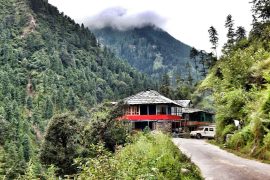
Bamboo is the major element available in the state of Tripura and the vernacular architecture of Tripura revolves around locally available materials like bamboo, timber, thatch, leaves, cane, and lime.

The bamboo and cane are collected during the winter season and the construction starts in the dry season, the whole community of people participates in the construction and they build houses in rectangular shapes.

Riang house

The Riang tribes of Tripura build their houses with bamboo as the major source material and thatch used for the roofing, the entire architecture of the rising house is made using bamboo alone from floor to beam and walls, finally, the roofing is done with the help of thatch. The Riang house is mostly rectangular in shape.

Mudhouse

Like most of the Indian states, the mud house is one of the ancient methods of building houses, still, in some parts of Tripura, we can see the mud houses, in ancient times the mud houses were built with complete mud and bamboo for beam, thatch, grass for roof.

In the present day, the mud house is built with mud and iron sheets for the roofing.

Tong Ghar

Tong Ghar is one type of great example of a pure house, made of only one material, the tong Ghar houses are made completely with bamboo, the walls are made of plain bamboo and the floor is made of ordered bamboo with a plain bamboo roof and grass to cover.

This helps the environment to stay in its ecological state rather than a chemically absorbed one.

Tin House

Tin houses are also seen in the present-day architecture style of Tripura, a house made of complete tin from the roof to bottom, Bamboo is used as a supporting beam and for window purposes alone, even the walls are of tin, tin is one such example for a very low-cost housing methodology.

Bamboo Bridges

Bamboo bridges are common things in Tripura but not in the rest of the country, as bamboo is the most available material in the state, they use it majorly for every purpose of life.

Crafts of Tripura

Like every northeastern state of India, Tripura is also famous for its craftwork which attracts people from other countries too, bamboo and cane are majorly used craft materials in Tripura.

From furniture, handbags, lamps, baskets, hand fans, shopping bags, purses, hats, window and door screens all the things are made with the help of bamboo in a very attractive way and manner.

The weaving is famous in the state of Tripura

Agriculture

Settled cultivation and shifting cultivation are two major methods followed by the people of Tripura in agriculture, with rice as the major production crop along with potato, jute, sugarcane, chili, and natural rubber as their major agricultural elements.

Tripura is the second largest state in India cultivating raw rubber next to Kerala.

Fruits

Tripura is famous for many such things but fruits are the core of Tripura’s identity to the rest of the country, the orange garden and pineapple garden are widely seen in the state and they supply the majority of the fruit to the neighboring state in India.

Attractions to look at

Tripura Sundari temple

The name of Tripura even evolved from the god of Tripura Sundari, one of 51 Shakthipeedas in India, the temple is the identity of the state located in Udaipur.

Neermahal

Neermahal is one such place of Tripura you can’t miss, the water palace is a treat to the adventurer and people who seek magic, 53 km away from Agartala the water palace is located in the heart of Rudra Sagar Lake.

Ujjayanta Palace

In the capital city of Tripura, we can witness the mighty works of the royal king who ruled the real of Tripura, with magnificent Mughal style architecture the white giant palace shines like the diamond in between the pearls, built in 1901 AD by King Maharaja Radha Kishore Manikya.

Jagannath temple

With a unique octagonal architectural style, the Jagannath temple is one such identity to the architects and their style of Tripura, in Agartala itself, the Jagannath temple is located, the temple built by King Maharaja Tripura himself.

Conclusion

From mountains to gardens, bamboo to canes the hilly state of Tripura is a whole new experience in India, like the poems of Robert Frost, the content more woods, and fewer roads so that we can explore into woods and lost in the hands of nature.

The tribal communities of Tripura show us the ancient side of the state, with histories older than the birth of Christ the state stands high in nature, architecture, and craft, of course, if you plan to get lost in nature, pack your bag and go to the five giant mountains of Tripura, you feel peace and the soul will surely dance to the music of the region.

To feel the ancient ethnic culture and crafts that make wonders from the hands of tribal peoples, fruits that give us honey, and mountains that give us memories to look at, Tripura is one such spot of pleasant and astonishing place to wander in.
Categories
Articles

Various colors of Architecture in Assam

India is of traditional country and following the rich ethnic culture and its traditions to date, Northeastern India is one of the unique traditions in India and has their own identity in case of traditions and the way they live, we are going to explore more the traditional architecture of Assam(the wonder of Northeastern India), Assam is the home of many wonders from amazing tea gardens, mighty Brahmaputra river, one-horned rhinos, and the royal tribal communities, Assam is also a home of architecture which we can even see today in some parts of the state, with various styles of architecture concerned to the region, it has a lot of stories to tell and we are going to explore it with patience and eagerness to know something new.   

Architecture in Assam

Assam is one of many wonders in India, It has some untold story of architecture that we all are craving, Assam being one of the seven sisters of Northeastern India has some different styles of architecture called the Assam type buildings, but Assam has more architecture styles rather than the Assam type buildings.

Assam is one such state that follows the vernacular architecture to date, vernacular architecture- is houses built with all the available resources around the locality, vernacular architecture is also effectively proven to survive with the climate of the region.

In Assam, the architecture of houses is based on the climate people face and protects them from the calamities of nature.

Architecture in Assam Before the British

Before the British advent in India, Assam the home of nature and wonders have houses made of bamboo, timber, and thatch, the Assam traditional architecture so-called Ahom didn’t involve bricks and stones in their architecture until early 1700, bamboo and timber(woods) are used to construct buildings in Assam because it suits well for their climate.

Architecture in Assam After the British

The British changed the entire architectural style of India and in Assam, its impact even changed their tradition of constructing, The Assamese followed the vernacular architecture (mostly used wood, timbers, and bamboo) but the British implemented constructing the building with the help of bricks and stones for their longevity.

Types of Architecture style in Assam

Assam has four styles of architecture at the longest of its history. Vernacular architecture is the core tradition of Assam, they built with the help of available resources around them.

Ikra House

Ikra house commonly referred to as the “Assam type house” is common throughout Northeast India. The majority of such houses are used for residential purposes. Typically these houses are built with lightweight locally available materials like bamboo, wooden planks, thatch, etc. Such houses have a proper system of bamboo/wooden beam-column and fulfill the earthquake safety requirements of rectangularity and simplicity. Ikra houses are single-story structures consisting of brick or stone masonry walls up to about 1 m above the plinth. This masonry supports the walls consisting of bamboo woven together with a wooden frame and plastered with cement or mud plaster. The roof generally consists of GI sheets supported on wood/bamboo trusses, which laterally connect the parallel walls. The bamboo superstructure is connected to the masonry foundation walls using steel angles, and flats with bolts and nails. There were no reports of any significant damages to Ikra structures during past earthquakes. 

assam type house

Ikra house suited well with the climate and nature of Assam during all seasons, and it also cost less when compared with the modern housing architecture style of constructing with bricks, steel, and concrete.

Bamboo House

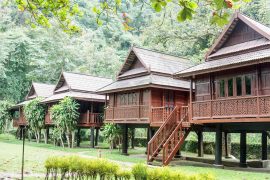
Today we see a house made of bamboo only in fancy resorts with premium services and high costs, but the Assamese used bamboo housing architecture for their purpose of living in accordance with nature, bamboo helped the Assam people more during the monsoon.

assam type house

In the bamboo housing system, for the main structural member bamboo is used. The brick wall is used for modeling. And it is rigidly connected with a plinth as well as with bamboo. In this system, the wall is made of bamboo strips and it is plastered with mud. The houses are detailed out to combat the heavy monsoons. The roof of the house is built on local grass and can last up to 10 years before it is replaced again. The stilted part of the house is for protection against gentle floods. But even today we can use bamboo as our core construction material because it has more advantages than we can imagine.

Tensile strength

Bamboo has a higher tensile strength than steel because its fibers run axially.

Fire Resistance

The capability of bamboo to resist fire is very high and it can withstand temperatures up to 4000 C. This is due to the presence of high values of silicate acid and water.

Elasticity

Bamboo is widely preferred in earthquake-prone regions due to its elastic features.

assam type house

Weight of bamboo

Bamboo due to its low weight is easily displaced or installed making it much easier for transport and construction. Unlike other building materials like cement and asbestos, bamboo poses no danger to health, They are cost-effective and easy to use, and they are especially in great demand in earthquake-prone areas.

Mud House

Even today in some parts of India rarely we can able to see mud houses, houses made of mud and cow dunk coated with grasses(straw) as their roof, mud house architecture is used to protect against the heat from the climate, it is a proven technique from the ancient time to sustain during the high summer vacations.

assam type house

Mudhouses can be built with materials like clay, cow dunk, soil, silt, and grasses for roofs. Today we are using houses made of concrete cement which is made of chemicals mostly, materials like this don’t help our environment, mud is breathable and also helps to sustain the heat inside the house.

Chang House

The raised stilt house is common in the Himalayan region, it is used for constructing houses in the hilly regions, we can able to see a change in concept houses in upper Assam on the banks of Brahmaputra, the Mishing tribal community of Assam used to live in the chang concept houses as it is their traditional way of living, most of the Chang houses are built in rivers, forest, and vegetation regions.

assam type house

It is even believed that the chang concept houses are first introduced by the mongoloid and the Mishing tribal people believe that they are the descendants of mongoloids. All the above four major architectural styles of Assam are of vernacular architecture and each architectural style is used to sustain through climate changes and weather of the region.

Present-day Assam Architecture

Today most of the Assam buildings are of bricks and stones with less wood, timber, and bamboo which is completely the other side of their traditional architectural style, the British impacted Assam by building houses with the help of bricks and stones, but even before the British advent in India, even Mughal emperors loved the way of buildings with bricks for their strength and longevity, but when we look back at the history the usage of bricks used in Assam in mid-1700 when king Rudra Singha of Ahom kingdom built the mighty Talatal Ghar in the Sivasagar, It is the first Assam architecture build with the help of bricks along with their traditional home architecture style.

The Kareng Ghar the so-called Garhgaon Palace is also a living example of the Ahom architecture style built by the Sunenphaa (Parramatta Singha) which is 15km away from the Sivsagar.

The Assam Bungalows

After the advent of the British in Assam, they Built a variety of buildings with newer architectural styles to the Assamese, it is called the British bungalow then and the Assam bungalow today, used for the administrative functions of the British government, the people of Assam also used the same pattern of architecture for their buildings, today is called the Assam bungalows.

Conclusion: the fading traditional architecture

Even though we speak of the pride of our traditions, traditional architecture and all, we are less concerned about the culture, and traditions that are fading in front of our eyes, all of the things that our ancestors used are effective for nature and also to the human body, living along the nature is the way our ancestors taught and it is also proven that they lived happy lives when compared with us.

The vernacular architecture style of  Assam is one such example of living along with nature and to sustain through the region we live, every architecture around us holds history and benefits of its own and we do not care or learn from it, do use more things which are good for us and the nature around us.